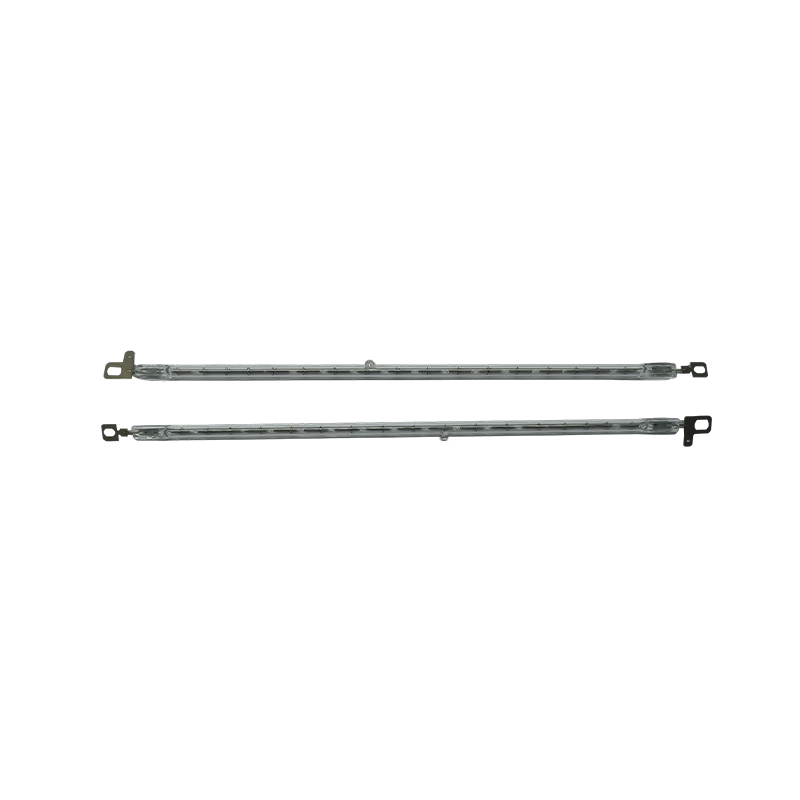
In analog and early digital copiers, one of the core aspects of image quality is the uniform exposure of the original document. This process, achieved with copier high-efficiency halogen lamps, highly depends on the spectral synergy between the light source and the photoconductor drum material. High-efficiency halogen lamps, with their continuous, stable, and tunable spectral output, have become the ideal light source for long-term matching with selenium-tellurium alloy photoconductors. This "light-electricity" matching is not accidental, but rather based on a deep understanding and engineering optimization of the material's photosensitive properties and the light source's radiation characteristics, ensuring efficiency and precision at every step from optical exposure to electrostatic latent image formation.1. Photosensitive Response Characteristics of Selenium-Tellurium Alloy: The Benchmark for Spectral MatchingSelenium-tellurium alloy, as a classic organic/inorganic composite photoconductor material, was widely used in copier photoconductor drums in the 1980s and 1990s. Its core advantages lie in its high dark resistance, low residual potential, and good fatigue characteristics. More importantly, selenium-tellurium alloys exhibit a distinct photosensitivity peak in the visible to near-infrared band—typically concentrated in the 450nm to 600nm range, with the most sensitive response occurring in the 500–550nm region. Insufficient energy in this band results in low photosensitivity, leading to dark images and poor contrast; excessive ultraviolet or infrared components may trigger non-selective discharge or thermal damage. Therefore, an ideal light source must provide high-intensity, stable radiation within this sensitive range.
2. The Continuous Spectral Advantage of Halogen Lamps: Naturally Matching Photosensitivity NeedsHalogen lamps are essentially a modified incandescent lamp, emitting light through thermal radiation from a tungsten filament at high temperatures. Their spectrum is continuously distributed, covering 350nm to 2500nm, with concentrated energy and a smooth, peak-free surface in the visible region. Crucially, in the 500–600nm band, the radiant intensity of halogen lamps is at the high end of the visible spectrum, perfectly coinciding with the photosensitivity peak of selenium-tellurium alloys. Experimental spectral analysis shows that the relative radiant power of a standard copier halogen lamp in this range can reach over 40% of the total visible light output, far superior to fluorescent lamps or early LEDs.3. Quartz Glass and Operating Temperature: Ensuring Spectral StabilityTo maintain efficient halogen cycling, the lamp tube is made of high-purity fused quartz glass, which is not only heat-resistant but also possesses excellent ultraviolet transmittance and thermal stability. The thin tube design ensures uniform tube wall temperature, which is crucial for the effective operation of the halogen cycle—too low a temperature prevents tungsten halide from decomposing back into tungsten; too high a temperature accelerates quartz crystallization. Under this temperature control, tungsten filament evaporation is effectively suppressed, resulting in long-term stable spectral output and avoiding color temperature drift and illuminance attenuation caused by filament thinning or blackening. This stability directly translates into consistency in the photosensitive drum charging-exposure-development process, ensuring that the image quality of thousands of copies does not deteriorate.4. System-Level Significance of Spectral Matching: Improving Overall Imaging PerformancePrecise spectral matching not only affects photosensitivity but also impacts overall energy consumption and lifespan. Because halogen lamps have high energy utilization in their effective wavelength range, they can achieve sufficient exposure without the need for additional filters or ultra-high power designs, reducing overall power consumption. Simultaneously, they avoid the aging effects of ultraviolet radiation on the selenium-tellurium layer and the impact of infrared thermal effects on drum deformation, extending the lifespan of the photosensitive drum. Furthermore, combined with a segmented filament design, halogen lamps can achieve spatial illuminance uniformity compensation, while spectral consistency ensures synchronized photosensitive response across the entire image, preventing blurry edges or overexposure in the center.The spectral matching between copier high-efficiency halogen lamps and selenium-tellurium alloy photoconductors is a paradigm of the synergistic evolution of optoelectronic materials science and lighting engineering. It's not simply about "making light work," but about precisely controlling the radiation characteristics of the light source to accurately deliver energy to the most sensitive "window" of the photosensitive material. Even today, with the widespread use of laser and LED light sources, this classic combination still reminds us that true efficiency stems from respect for the physical essence and meticulous control over details.