How to Achieve Optimal Compatibility Between Copier High-Efficiency Halogen Lamps and Tellurium Selenide Alloy Photoconductors?
Publish Time: 2026-03-30
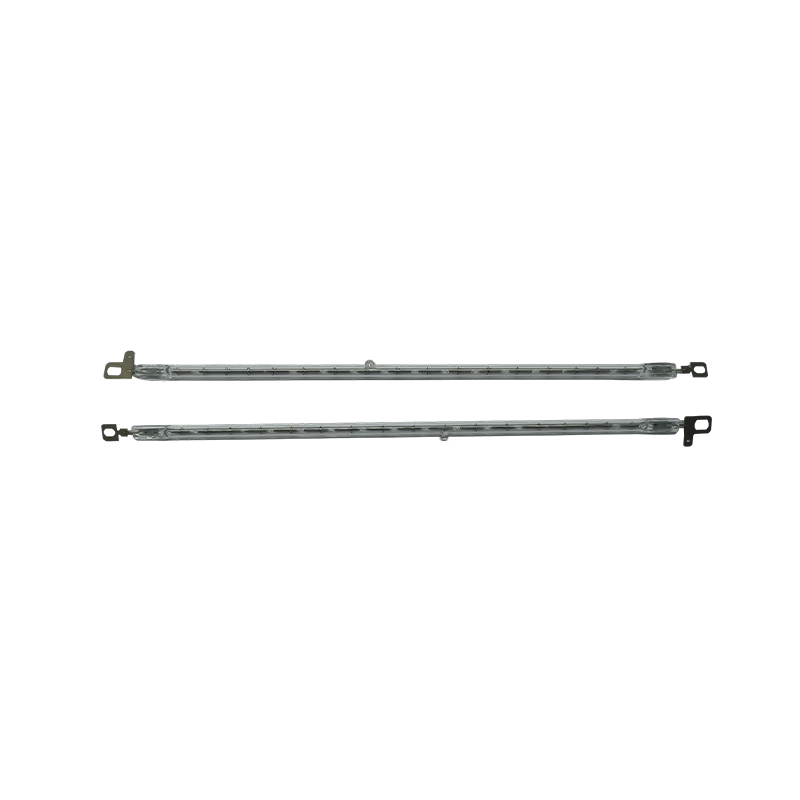
In modern copiers and laser printers, copier high-efficiency halogen lamps are critical light sources. Their stable brightness and long lifespan are essential for print quality and operational efficiency. To achieve optimal performance, copier high-efficiency halogen lamps need to be closely integrated with tellurium selenide alloy photoconductors to ensure spectral matching and photoelectric conversion efficiency. The coordinated design of the light source and photodetector not only affects image clarity but also directly relates to the equipment's lifespan and stability.
1. The Importance of Spectral Matching
Copier high-efficiency halogen lamps emit light through a high-temperature tungsten filament, emitting a spectrum primarily composed of visible light with a certain infrared component. Tellurium selenide alloy photoconductors are sensitive to light within a specific wavelength range, and their photoconductivity changes with the intensity of incident light. Therefore, to ensure a high response of the photoconductor to the light source, the spectral output of the copier high-efficiency halogen lamps must match the spectral sensitivity region of the tellurium selenide alloy. Spectral matching not only improves photoelectric conversion efficiency but also avoids energy waste, enhancing the imaging accuracy and speed of copiers and printers.
2. Tungsten Filament Design and Temperature Control
The brightness and spectral characteristics of copier high-efficiency halogen lamps are closely related to filament temperature. By precisely controlling the tungsten filament diameter, current, and halogen cycling pressure, the filament temperature can be stabilized, ensuring the emission spectrum remains stable within the high-response band of the selenium-tellurium photoconductor. Furthermore, uniform filament emission avoids uneven light spots, ensuring a consistent light-receiving area for the photoconductor, thereby reducing imaging errors and noise. Stable temperature control is one of the core technologies for achieving optimal compatibility between the light source and the photoconductor.
3. Lamp Material and Halogen Cycling Optimization
Copier high-efficiency halogen lamps are typically made of thin-tube quartz glass, whose high transmittance and high-temperature resistance ensure efficient light energy transfer to the photoconductor. Halogen gas circulation mechanisms suppress tungsten filament evaporation, extending filament life to 2000 to 4000 hours. Stable light output not only improves equipment reliability but also ensures stable response of the photoconductor during long-term use, preventing a decline in photoelectric conversion efficiency. Long-term compatibility between the light source and photoconductor can be achieved through proper design of lamp wall thickness, tube diameter, and gas composition.
4. Geometric Layout and Light Transmission Optimization
Besides spectral matching and light source stability, the geometric distribution of light is equally important. Copier high-efficiency halogen lamps typically require reflectors or optical lenses to uniformly project light onto the surface of the selenium-tellurium alloy photoconductor. The uniformity of the beam and the incident angle directly affect the consistency of the photoconductor's response. Excessive light concentration can lead to localized overload; insufficient light reduces signal strength. By optimizing the filament position, reflector structure, and optical path design, uniform light coverage of the photoconductor can be achieved, ensuring optimal photoelectric response.
5. Long-Term Stability and Material Compatibility
The long-term stability of the light source and photoconductor also depends on the heat resistance and chemical compatibility of the materials. The high temperature and halogen gases of tungsten filament lamps can cause aging of optical components during long-term operation, and selenium-tellurium photoconductors are temperature-sensitive. By selecting high-temperature resistant quartz glass, optimizing the heat dissipation structure, and controlling halogen gas pressure, the impact of lamp heat on the photoconductor can be reduced, extending the overall system lifespan. Simultaneously, the stability of the lamp wavelength and the photosensitivity stability of the photoconductor work together to ensure that imaging performance does not degrade during long-term operation.
The optimal compatibility between copier high-efficiency halogen lamps and selenium-tellurium alloy photoconductors is the result of synergistic optimization of multiple aspects, including spectral matching, filament temperature control, halogen cycling, optical geometry design, and material durability. By comprehensively considering the light source output characteristics and the photoconductor response characteristics, efficient photoelectric conversion, uniform illumination, and long-term stable operation can be achieved, providing reliable and clear imaging support for copiers and laser printers.