How can the thermal management design of copier high-efficiency halogen lamps be optimized in high-speed printing equipment to avoid overheating leading to shortened lifespan or performance fluctuatio
Publish Time: 2026-04-13
In high-speed printing equipment, the high-efficiency halogen lamps used in copiers play a crucial role as the exposure light source, and their operational stability directly affects image quality and equipment lifespan. Copier high-efficiency halogen lamps generate a large amount of heat under high-power, high-frequency operation. If the thermal management design is inadequate, it will not only shorten the lamp's lifespan but also cause light intensity fluctuations, thus affecting print consistency.
1. Core Technology Principles
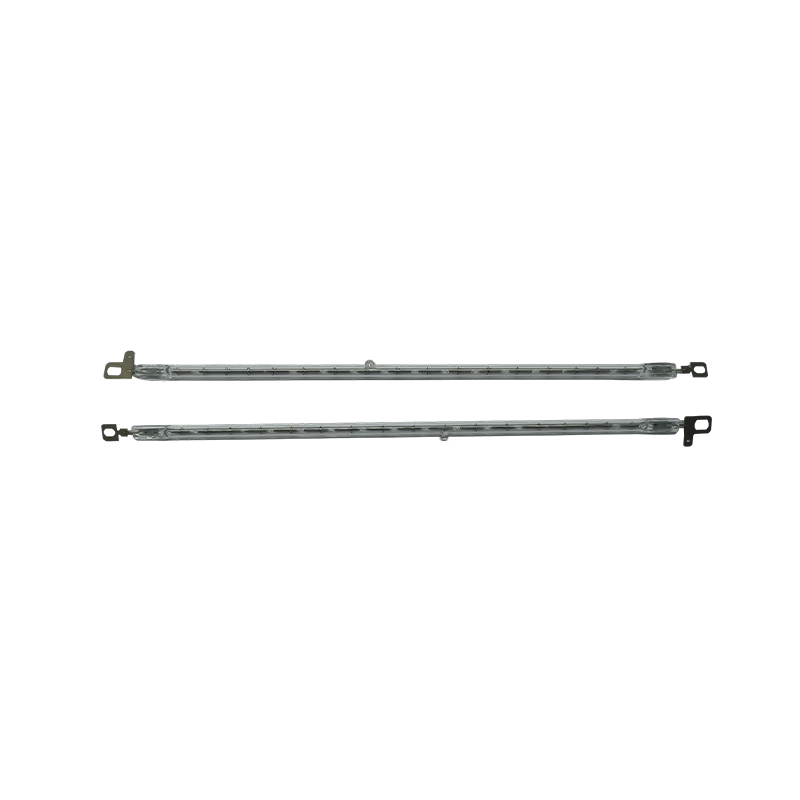
The light emission of halogen lamps relies on a typical halogen cycle mechanism: the tungsten filament emits light at a high temperature of approximately 3000K and undergoes a reversible reaction with halogen gases such as iodine and bromine, forming a dynamic cycle, thereby suppressing tungsten evaporation and extending lifespan. Halogen lamps specifically designed for copiers typically employ a thin-tube quartz glass structure to ensure uniform temperature distribution within the tube wall and to match the spectral response of the selenium-tellurium alloy photoconductor. Furthermore, a segmented filament design can compensate for light decay at the edges of the optical system, achieving uniform exposure. These designs, while improving optical performance, also place higher demands on thermal management.
2. Heat Source Control and Power Regulation
During high-speed printing, halogen lamps often operate in a state of frequent start-stop or high duty cycle. By introducing intelligent power control modules, such as PWM dimming or graded power supply strategies, the input power can be dynamically adjusted according to actual exposure needs, avoiding overheating problems caused by prolonged full-load operation. Simultaneously, reducing filament temperature in standby or low-load states not only reduces heat accumulation but also slows down filament aging, reducing the impact of thermal stress on performance from the source.
A reasonable structural design is the foundation of thermal management. First, placing a high thermal conductivity metal reflector around the lamp tube improves light energy utilization and quickly dissipates heat. Second, optimizing the lamp tube's installation position to place it in an area with smooth airflow helps to form natural convection. Furthermore, adding heat sinks or heat conduction channels in key areas conducts heat from localized high-temperature areas to a larger area for dissipation, thereby avoiding performance fluctuations caused by localized overheating.
4. Active Cooling and Airflow Management
For high-speed equipment, passive cooling alone is often insufficient, necessitating the introduction of an active cooling system. A common and effective method is to precisely design the airflow structure, using fans to generate directional airflow to guide cool air to the lamp surface and remove heat. The design should avoid dead air zones and control the balance between airflow speed and noise. Furthermore, temperature sensors can be used to monitor lamp temperature in real time, automatically adjusting fan speed based on feedback to achieve dynamic thermal management.
5. Material and Heat Resistance Enhancement
The heat resistance of the lamp material is equally crucial. Using high-purity quartz glass can withstand higher temperatures and reduce stress caused by thermal expansion. Simultaneously, using high-temperature resistant ceramics or high-performance engineering plastics in the lamp holder and connecting structure can prevent structural deformation or aging caused by prolonged high temperatures. In addition, by optimizing the coating material, some heat radiation can be reflected back to the filament, improving luminous efficiency while reducing ineffective heat loss.
6. System Coordination and Lifespan Management
Thermal management is not an isolated process but requires coordination with the overall system control system. By establishing a lamp life model and performing predictive maintenance based on usage time and temperature history, lamps can be replaced before performance degrades, avoiding sudden failures. Simultaneously, the layout of the optical, transmission, and cooling systems is coordinated within the overall design to ensure that heat does not adversely affect other critical components.
In summary, optimizing the thermal management of Copier high-efficiency halogen lamps requires comprehensive consideration from multiple dimensions, including power control, structural design, active cooling, material selection, and system coordination. Only by achieving refined and dynamic thermal control can stable optical performance be guaranteed while effectively extending lamp life and improving overall system reliability.